Chapter 45: Imitation
The morning after our arrival, the troupe followed Jahoda down the slope in a single line to see the hall. We had heard in Speranza that the ceiling was high and that it had iron beams, but once we stepped through the doors, it was taller than we had heard. I was not the only one who tipped their head back.
For the next three days, we could not enter the hall. While the Design Bureau people hung the mechanisms, only the theater director and the two rope handlers went down the slope each morning. The troupe used the upper corridor of the Flagship as a rehearsal room, singing and stamping out their steps.
The hall we entered again on the evening of the performance was different from four days ago. Ropes descending from the beams held mechanisms over the stage, and painted panels the Design Bureau had brought from across the sea stood beneath them. Even when I looked up, I could not see where the ropes began; they disappeared into the darkness.
If this had been a theater, there would have been a glass ceiling above. Here, iron beams crossed where the glass would have been, and beyond them was only darkness.
Wooden boards rather than stone covered the hall floor, and every time the tip of my cane touched them, a dull sound rang out unlike the sound in the theater corridors. With every step, the smell of iron embedded in the floor mingled with the scent of oil.
The two rope handlers were behind the stage, pulling each rope end one at a time to test it. They seemed to know which ropes had passed through their own hands during the three days they had worked alongside the Design Bureau people, and the rope pulled by the quieter one tightened without a sound.
"The person overseeing the mechanisms has Design Bureau work, so they can’t attend tonight’s performance."
The theater director came to the side of the stage holding a sheet of the roster, but did not mention that person’s name. I knew only from a single remark I had heard at the harbor on the day we left that the person who had made my cane had arrived in this land before us. Tonight, too, it ended with that one remark.
There were no stools in the darkness beside the stage. The stool the old man had used, and the prop room stool, had both remained at the theater across the sea. On the ship, Vodianitsa had dragged over a crate and made me a place where I could see, but in the hall no one assigned me such a spot.
Among the crates piled in the corner of the hall, I dragged one empty crate the trading company had used to bring cargo beside the stage. It was a place visible with only a turn of the head from the stage, and this time, I chose that place myself.
Sitting on the crate with my cane laid at my feet, I found it lower than a stool. The stage floor came up to about eye level, the lanterns lined up directly before me, and beyond their light was not an audience but simply darkness.
The rope handlers placed the small box they had carried from the lodging beside it. Ever since they had lined the inside of its lid with an extra layer of cloth, nothing had cracked even over the seven-day sea voyage. As promised, I opened the lid and counted them three times before the performance. All three times, there were twenty.
When I opened the box of candlesticks, there were indeed twelve candlesticks. As I counted, Jahoda’s voice from the hall entrance organized the arriving people into lines. Perhaps they were merchants attending the exhibition; more footsteps crowded through the doors than on a theater performance day.
It was a night nearly five months after the old man’s funeral. During that time, I had counted glasses on the left side behind the stage on every performance night. Today, the place where I counted and the place where I watched overlapped in one crate.
There was no bell. In place of the theater bell that rang three times—when the main doors opened, when the ticket-window shutters came down, and when the curtain rose—here, one knew the time by lanterns being lit one by one. When all the lanterns on the stage floor had been lit, the sound near the entrance died down.
Vodianitsa came out from behind the stage and glanced toward the crate. She sent me only a smile, without words, but beneath the hall lanterns, that smile was just as bright as it had been in the theater.
I left the glass-box lid open, covering it only with cloth. The work of counting the glasses sent out during the performance and counting the glasses that came back in was exactly as it had been on the left side behind the stage. The only thing that had changed in the hall was where I sat.
A young troupe member passing by looked back and forth between the crate beside the stage and me seated on it. He seemed unaccustomed to seeing someone seated beside the stage, but only tilted his head before going backstage without a word.
The chorus murmured backstage as they took their places. It was just like what I had heard inside the theater’s back door; if I closed my eyes, I could not have told where I was. But when I opened them, there was darkness overhead instead of glass.
There was no curtain, either. In a hall with no curtain to draw back, the beginning was the chorus walking out from backstage and taking their places. Footsteps in the darkness stopped as they watched.
The dance came first. Odette stepped lightly between the lanterns and stood in the middle of the stage. The floor was wider than the one at the theater, so it took one additional step to make a full turn.
Then came the songs. The third song was Vodianitsa’s solo, so no glasses were being sent out. In the meantime, I was counting in advance the glasses that would go out afterward.
My hand stopped. The sound was different.
At the theater, the glass ceiling resonated whenever Vodianitsa’s voice rose. The sound reached upward, trembled, and came back down, and that vibration traveled all the way to the stool on the left side backstage, touching the hand that counted glasses. Here, that vibration did not come.
The sound did not return from where it rose. It passed the beams and entered the darkness above, where it simply vanished. Another sound rose into the place it had vanished from.
A sound that did not return was strange to my ears. A voice that filled an entire theater filled nothing in the hall, only going upward, and no one inside knew how far it had gone.
Vodianitsa seemed to know. At the rising passage, she tipped her head back a little farther and sent it higher, knowing it would disappear there. Yet the smile she wore on performance days never left her face.
My hand remained still until the third song ended. The fingers that had been counting ahead rested atop the third glass, and an entire song passed over them.
The next song was one we had only heard in rehearsal for this exhibition. On the ship, the voice had ridden the wind all the way to the bow, but today it came together with the piano. Listening atop the crate felt the same as it had aboard the ship, except there was darkness above my head instead of wind.
The audience was darkness beyond the lanterns. I could not see who sat where, nor did I try to look. In that darkness, no one coughed.
Whenever the song rose, it felt as though the darkness rose with it. My eyes followed the song as it passed beyond the beams, and though I knew there was nothing there, I could not look away.
The glass box remained open at my knee. I could have found out by touching them whether the twenty glasses beneath the cloth were trembling with the song, but my hands stayed on my knees.
I listened to the end. Vodianitsa had once said that if the seat beside you was empty, you could not know whether someone had listened to the end. Today, her side would not have been empty either, and I did not leave my place until the song disappeared beyond the beams.
Only long after the final sound vanished did applause arise from the darkness. It was applause later than at the theater, and that delay was the height the sound had risen to.
Vodianitsa looked toward the side of the stage as she caught her breath. Her eyes met those of the person seated atop the crate. Her eyes did not ask, and I nodded.
It meant I had listened to the end. As if it had reached her, Vodianitsa silently formed some words with her lips and went backstage. Only after she was gone did the hand counting glasses move again.
After that came two more songs and one dance. It was the turn of those who were not principals, so their voices did not rise as far as the beams, and glasses went out and came back during those songs.
Those carrying glasses came around to the side of the stage instead of the left side backstage. Every glass that went out returned to the box through my hands, and my hands did not stop while the songs continued.
The mechanisms came last. As the ropes descending from the beams were pulled, the painted panels lifted over the stage, and when lantern light shone beneath them, the darkness stirred again.
The two rope handlers gripped those ropes backstage. They had been the two who, upon hearing about the ceiling in Speranza, had first worried about the rope lengths. Tonight, the long ropes raised the painted panels and set them back down without incident.
The panels made a sound when they touched the floor. Beneath my knee tingled once, and while that sensation subsided, the applause in the darkness ended.
I counted the glasses three times and closed the count at twenty. After covering them with a layer of cloth and lowering the lid, I set the box against the backstage wall and picked up the cane at my feet.
The hall’s back door was at the far left end of the backstage area. Unlike the theater’s back door, where I had to descend three stone steps, this one had only a threshold, and I could cross it without a railing. When I pushed it open, the sea wind rushed in first and struck my face.
The alley ran long down the slope along the hall wall. Wind rose from the sea and blew against the alley, and two people stood within it.
One was Vodianitsa. She was still in her stage clothes with only a coat thrown over them. Facing her was a young woman with a hat pulled low over her face. Both turned their heads at the sound of me pushing open the door.
They had not seen me. Their turned heads immediately faced back again, and they looked at one another. Even from beside them, I could see it took each of their eyes a beat to recognize the other.
"...You’re the girl who came to the back door that time."
"Soprano! I heard every bit of that song inside!"
When the woman in the hat stepped closer, bright eyes showed beneath its deeply lowered brim. Something like a little snowball rested on her shoulder, but it did not scatter even in the wind, so it was not snow.
The snowball moved. It turned its body atop her shoulder to look this way, and the woman in the hat tapped it lightly with a fingertip.
"Lumi. We’re always together."
I could not tell whether she was speaking to me or to Vodianitsa. Vodianitsa was not surprised even when she saw Lumi, and the woman in the hat looked at Vodianitsa again.
"It went all the way up, didn’t it? Higher than it did in the theater."
"That’s because the ceiling here is high."
"It isn’t because of the ceiling. It goes there because the sound reaches there."
Vodianitsa smiled. Having come down from the stage, she was speaking as quickly as she did in the prop room.
"You didn’t ask my name then. I didn’t ask yours, either."
"I was busy letting you hear sounds then. I’m Linnea, and I serve as an adviser to the Adventurers’ Guild."

The person named Linnea held out her hand to Vodianitsa. Vodianitsa shook it but did not offer her own name.
"You know it, principal."
"You weren’t a principal then."
"I am now."
Linnea burst out laughing. Her hat brim shook, and Lumi on her shoulder shook with it, but did not fall.
"I couldn’t stay in Snezhnaya City for long then. It was too cold for me there, so after seeing one performance, going to the back door, and letting you hear a few sounds, I boarded a ship the next day."
"You left because it was cold?"
"Because it was cold. I had more sounds to let you hear, but my body got onto the ship first."
The person who had left a cold land because it was cold stood here without even turning up her coat collar. Even I, who had shivered in both lands, did not know how Nod-Krai’s cold differed from Snezhnaya City’s cold.
Linnea turned her body toward Vodianitsa. Her question went back to her as well.
"You came because of the exhibition, right? I saw the Korolyovsky Troupe on the roster, so I thought maybe."
"What do you mean, maybe? You didn’t even know my name."
"I don’t know your name, but I know your sound. If the troupe’s name is on the roster, that sound is coming. Of course I had to come."
"You said you came to watch the performance, so why are you at the back door?"
"It was the back door then, too."
Vodianitsa opened her mouth to say something, but laughed instead. She had no answer to the fact that it had been the back door then, too. Lumi leaned toward that laughter from Linnea’s shoulder.
The two spoke of that back door from back then and debated how many sounds Linnea had let Vodianitsa hear. Vodianitsa said three, while Linnea said four. The fourth had been a sound from beneath the sea, not made with the mouth, and they laughed again over whether it should count.
I had heard Vodianitsa mention across the sea that it was not a sound made with the mouth. At the time, I could not even imagine what it was. Now that the person who made it stood before me, it seemed even farther beyond imagining.
The wind swept up the alley again. From within the hall where the performance had ended, signs of people leaving stretched on beyond the wall. The three of us stood outside the back door until they had all gone.
Only then did Linnea’s eyes come to me. They were eyes that looked at my cane first and my face afterward.
"Who’s this?"
It took Vodianitsa a beat to look at me. In that interval, wind swept through the alley.
"He uses my chapter."
"Chapter?"
"Yeah. My chapter."
Vodianitsa did not explain any further. Someone stood before her wondering what that chapter was and where it was, yet she only smiled at them. Perhaps Linnea took that smile as an answer, because she did not ask more.
Instead, she examined me. Linnea’s gaze traced the iron bands of my cane one by one, rose to the cloth wrapped around its handle, then lowered again and stopped at my left leg.
"Your left leg doesn’t bend. How long has it been like that?"
"A little over a year."
"Where are you from? You’re not from Snezhnaya City, are you? Your speech is a little different."
It was the first time anyone had told me my speech was different since coming to this land. Jahoda had asked where I came from, but she had not said I spoke differently. This person traveled about listening to sounds, so perhaps her ears were different.
"I’m from Snezhnaya City."
"You sound different from there. And what were you counting inside earlier? Your hand was moving like this."
Linnea folded her fingers one by one, imitating my hand as it had counted glasses beside the stage. As her eyes wondered what that hand was doing, Vodianitsa stepped forward and blocked her view with an arm.
"Don’t look at him. Don’t put him in your field guide."
Linnea’s fingers stopped halfway folded. Hers was not a face that would retreat merely because it had been blocked.
"I won’t put him in a field guide."
"Those were field-guide eyes."
"I was just curious. The way his hand moved was interesting."
"Even if it’s interesting, no."
Both the one blocking and the one being blocked were smiling. It was not a sharp quarrel, but the playful pushing and pulling of people who knew each other. Yet I was what was hidden behind that arm, and no one but the person blocking knew why.
Lumi jumped from Linnea’s shoulder to Vodianitsa’s arm and back again. Once the little snowball had landed on the blocking arm and departed, Vodianitsa lowered her arm. Linnea looked at me again through the gap.
"Then I won’t put you in it. Can I at least ask your name?"
"I’m Kim Sang-hyeon."
"Kim Sang-hyeon. The person who uses the soprano’s chapter."
Linnea repeated the name and nodded. She did not ask what followed after that name.
The other side of the wall fell quiet. The footsteps at the end of the alley faded as those leaving the hall gathered toward Speranza below the slope. All that remained was the wind and the three of us.
Linnea looked up at Vodianitsa from beneath her hat brim. The words that had flown swiftly back and forth until then slowed there.
"You haven’t sung the end yet, have you?"
"I haven’t."
"You didn’t sing it today either."
"I didn’t today, either. You heard it yourself."
Linnea nodded. It was the face of someone who knew because she had heard, yet asked once more.
"Will you keep not singing it?"
Vodianitsa did not answer right away, instead looking down the alley toward the sea. She kept her mouth shut as the wind swept her hair back, then turned around.
"...Only by the water."
"Only by the water?"
"Yeah, only by the water. I won’t bring it out in front of people."
I had heard similar words in the empty seats across the sea. Then, I had heard what came after those words, too. Today there was nothing after them, and Vodianitsa ended her words there in front of Linnea.
There were two people in the alley who knew what lay beyond those closed words: the person who had sung that end by the water, and the person who had received that end in words.
"Did this person hear it?"
The eyes asking while looking at me were bright. They were not eyes prying for something, but eyes asking from curiosity, which made them all the more direct.
This time Vodianitsa did not block her. The arm that had said not to put me in a field guide remained lowered, and that arm told me that I had to answer this question.
"I didn’t hear it as a sound."
That was all. I did not mention what I had heard it as other than sound, nor Vodianitsa’s words that even heard in words, an end was still an end. It was not difficult to leave those things unsaid.
I had done this before—kept something someone had given me from being brought out before others. It had been like that on the day I told Vodianitsa Alyosha was not coming today. That statement had not been a lie, and neither were my words today.
Linnea looked at me a little longer. Her eyes seemed to pick at what might exist in those words besides sound, but they did not go any further. They stopped there.
"I see."
That was all. Linnea did not pry further. Only then did Vodianitsa lower her shoulders as though she had finally breathed, and I was the only one who saw those shoulders fall.
The sea wind pushed at my back. As though pushed along by it, words came from my mouth.
"Linnea."
"Yeah?"
"Could you let me hear just one of the sounds you let Vodianitsa hear then?"
It was the second time, after Jahoda, that I had been the first to ask for something since coming to this land. Unlike lunch in the prop room, when my palms had sweated after I asked, today the wind dried my palms before they could even sweat.
Linnea pushed up her hat brim with one hand. The eyes beneath it passed over Vodianitsa before coming to me.
"What sound do you want to hear? A bird’s call? I can’t do the sound beneath the sea. That one isn’t made with the mouth."
"I’d like to hear the sound of the bird that lives on that mountain."
"Ah, that one."
Linnea cleared her throat. Lumi straightened up as if it knew the sound, and Vodianitsa crossed her arms beside me.
What came from Linnea’s throat was a bird. A single bird perched with folded wings on a snow-covered branch flew into the alley, called twice, and fell silent.
When Vodianitsa had imitated the same bird, it had sounded like a doorknob turning. In the empty seats, I had laughed when she said it was a bird when that girl did it. Today, my ears knew that her words had been true.
"This one. This is what I let you hear then, too."
Linnea said the mountain’s name. I had never heard it either across the sea or here, so I could not guess what land it belonged to. She said that even when snow piled deep, the bird never left the mountain.
Lumi climbed down from Linnea’s shoulder into her palm. It looked as though it were staring up where the bird had fallen silent, begging for more, but Linnea lifted her hand and returned Lumi to her shoulder.
"...It’s a bird."
"A bird, right? What did you hear?"
The answer came not from me, but from Vodianitsa. Her voice was mixed with laughter.
"He heard me imitate it. Then he asked whether that was a bird sound."
"Try it."
"No. I won’t do it twice."
Linnea cackled. Vodianitsa pretended not to laugh, then laughed along with her, and at the end of that laughter she looked at me.
"Why are you asking her?"
She said it with a smiling face, so there was no edge to it. It was unlike the voice she had used the day she confronted Lyuba by the wall about what she was reading while standing there. She simply sounded as if she were asking why I had asked someone else instead of her.
"You said I had to ask if I wanted to use it."
Vodianitsa’s mouth stopped, and her eyes widened. She had been the one to say that beneath the theater wall while putting candy only into her own mouth, so it had taken a little over three months for those words to be returned to her.
"...I did say that."
"So I asked."
"Right. Then that’s fine."
Linnea looked from one of us to the other. She did not know what a chapter was, so she could not know what it meant to ask if one intended to use something, yet she smiled without knowing.
Vodianitsa’s hand slipped into her coat and came out holding a tin. It was the floral-patterned tin I had bought her with my first wages, the one always in her inner coat pocket. Its lid, dented in the accident, remained unstraightened.
One candy went to Linnea. The next came my way. Unlike the day beneath the theater wall when she had put them only in her own mouth, today her hand came all the way to my palm to leave the candy there. I put it in my coat pocket.
"What’s this? Why is the tin like that?"
"It rolled."
When Linnea tried to peer at the dented lid, Vodianitsa put the tin back inside her coat. I could not tell whether that also meant not to put it in a field guide, or whether she simply did not want to spare any more candy.
The wind blew hard again. Linnea’s hand went to her hat brim, and the hand pressing it down did not lower immediately after the wind passed. It seemed the wind had been strong.
While the alley’s bird still lingered in my ears, I remembered Vodianitsa’s words that the song in the water had merely followed what she heard. I felt I might understand that following along and imitation were different things, but I did not say the thought aloud.
Two lights came up at the end of the alley. They came from the sea below the slope, so at first I thought they were harbor lamps, but the rhythm of their swaying approach was the gait of walking people.
The front light was yellow lantern light, but the one behind was blue. It was too blue to be called lamplight, and as it reflected on the alley’s stone wall, the wall seemed to be underwater. The person holding that light was a head taller than the person in front.
Linnea raised her hand first. Perhaps they knew one another, for the front light swayed as if answering that hand.
"Linnea, the back door again? You stand there every exhibition."
"Master Sergeant Susie. There was a performance today."
"I heard it. Could hear it all the way outside the hall, too."
The front lantern stopped before us. The person holding it was a middle-aged man in a thick coat, deep wrinkles carved into a face roughened by sea winds.
"You’re with the troupe, right? We watch the roads at night throughout the exhibition. If you’re the troupe, we’ll go with you to your lodging."
"Are you a lamplighter?"
Vodianitsa asked. I had never heard a person holding a lamp called a lamplighter, but Vodianitsa had apparently heard the word somewhere and was already using it.
"That’s right, I’m a lamplighter. Call me Susie."
The man called Master Sergeant Susie spoke casually. I did not know what position a master sergeant was, but Linnea called him that, so that was how I heard it. He did not bother adding his title himself.
The blue light behind him drew near in the meantime. A tall person stood behind Master Sergeant Susie holding a lantern at chest height. His face looked bloodlessly pale in the blue light, but his eyes were calm.
"This is Flins. He patrols with me."
Master Sergeant Susie gestured behind him with his chin. The person called Flins dipped his head slightly, raised it, and gave his own name.
"I am Flins. Lanterns exist to light the darkness."
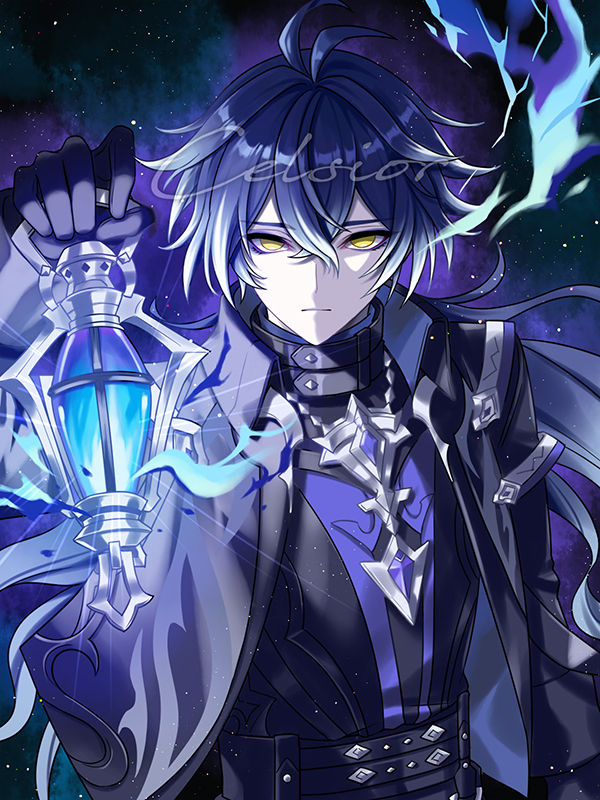
That was the entirety of his greeting. I could not tell why he said such a thing, but his manner of speaking differed from every manner I had heard in this land, reminding me of the theater director’s crisp voice when he read court documents.
Master Sergeant Susie asked for the theater director. When Vodianitsa said he was likely inside the hall, Susie stuck his head through the back door and called him out. The theater director, upon coming outside, nodded at the word lamplighter.
"The upper floor of the Flagship. It’s almost at the top of the slope."
"I know it. The house with a ship on its sign, right? Once everyone’s gathered, we’ll go together."
The troupe came out through the back door one by one. The chorus emerged first, followed by the dancers. Odette, who came out last, stood beside Vodianitsa and said nothing even upon seeing Linnea and Lumi.
The two rope handlers came out carrying the glass box. It seemed they meant to carry it all the way to the lodging instead of leaving the box against the backstage wall. The quieter one held a corner of the box and pointed to it with his chin.
It meant the box was there. It was a gesture to inform the person who had counted them in, so I nodded too.
Flins’s blue light came before my feet. Without asking anything, he angled the lantern downward, and the places for my cane tip to land became clear within that light.
I could not tell whether he had shone it after seeing my leg, or whether he had simply shone it. Flins did not say anything, and neither did I, but the light remained there until I moved my cane.
Master Sergeant Susie told the theater director he would come again at the same time tomorrow. He said that throughout the exhibition, he would wait at the end of the alley to match the time the hall performances ended, so the troupe need only come out the back door. The theater director accepted those words with a nod.
The blue lantern did not sway even in the wind. The yellow lantern’s flame flattened whenever the wind passed, then rose again, but the blue one burned at the same height. Beneath its light, Lumi looked whiter than a snowball.
In the meantime, Vodianitsa turned to Linnea. She looked as though she had something to say before the two lanterns led the way.
"Come again tomorrow."
"I’ll come to the back door every day after the performance ends."
"You can come to the front instead of the back door."
"The back door is more comfortable. The sound carries better here."
Linnea waved. Lumi looked toward us from atop her shoulder, then turned and hid behind Linnea’s neck.
"See you tomorrow, principal. See you tomorrow too, Kim Sang-hyeon."
Leaving those words behind, Linnea turned into a side path off the alley rather than climbing the slope. Linnea was the only person in this land who had called me simply by my name with a polite form attached—not uncle, not prop-room uncle, but just my name.
The troupe climbed the slope following the two lanterns. Master Sergeant Susie led ahead with the yellow light while Flins held the blue light at the very back, and people walked in single file between them. I was at the end of that line, directly in front of Flins.
Blue light spilled from behind to before my feet. My shadow lay long in front of me, and one by one, places where snow had been swept off the stone road emerged in that light, leaving nowhere for my cane tip to slip.
The wind still blew from behind. It pushed at my back, making the climb easier, and the rhythm of my cane tip against the stones was lighter, too.
It was a night when a question left me without being stopped. I had neither asked in advance whether I could ask nor apologized after asking. What came back was one bird call and one candy.
Up ahead, I heard the name Linnea once or twice amid Vodianitsa’s quick words. Odette’s brief replies were carried away by the wind before they reached the back.
Halfway up the slope, the road curved. Master Sergeant Susie’s yellow lantern turned the corner first, and the troupe followed, disappearing one by one behind it.
When it was my turn, I slowed. The end of the corner stone was a place my cane tip might catch, and as I shifted my feet, the blue light behind me touched my back.
The blue flame rose high once, then lowered.
Comments (0)
Please log in to leave a comment. Login or Register